01
Focused SEO workflow
Purpose-built fields keep the task clearer than editing raw markup by hand.
Start typing to search 227 tools.
Generate Product and Offer JSON-LD for visible product details.
Structured data is ready to review.
Check the human-readable preview, then copy JSON-LD only if it matches the visible page.
Product Schema Generator builds Product JSON-LD with a nested Offer from product information that shoppers can verify on the page. It supports name, URL, description, image, SKU, brand, price, currency, availability, and item condition.
Structured product data is only useful when it stays synchronized with the visible page. Prices, stock status, and product identity should be updated together rather than generated once and forgotten.
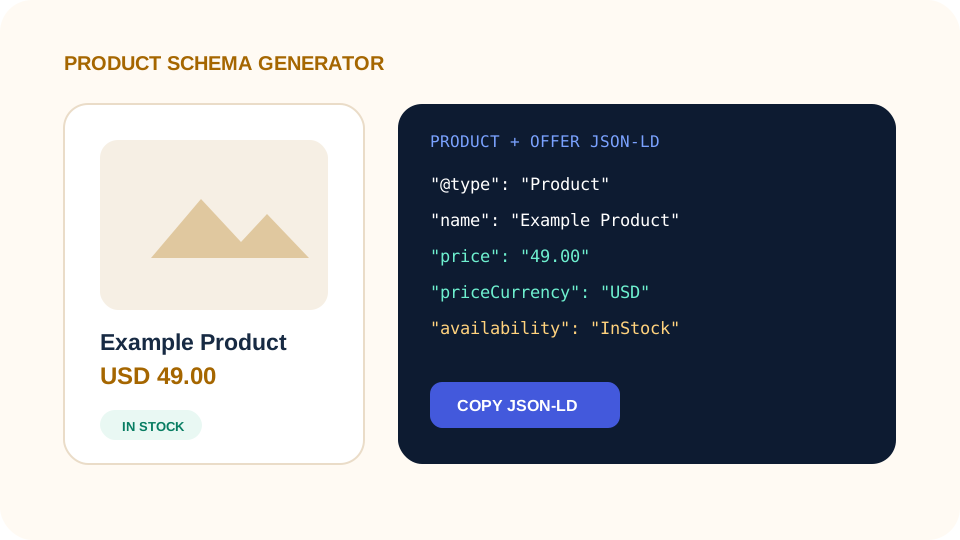
Focused controls, predictable output, and a workflow designed around this exact transformation.
Purpose-built fields keep the task clearer than editing raw markup by hand.
Common malformed values are rejected before the result is generated.
Results are formatted for quick review and implementation.
The same valid inputs produce predictable structured output without a third-party API.
Practical details about input, output, privacy, limits, and the best way to use this tool.
Product structured data identifies a product and can connect properties such as brand, SKU, image, and offers.
Offer represents commercial details such as price, currency, availability, condition, and the product URL.
It should not. Structured data should accurately represent the visible product and current offer.
They are optional in this generator, but stable product identifiers can make the entity clearer when they are real and available.
No. Search engines determine eligibility and presentation based on their current policies and the page as a whole.
Generate Product and Offer JSON-LD from visible product details including price, currency, availability, brand and SKU. A dedicated interface reduces syntax mistakes and makes the generated result easier to audit before it reaches a template, CMS, or production page.
The output should always represent the real page or entity. Technical validity is useful, but accuracy, consistency, and visible user-facing content remain more important than simply adding more metadata.
Start with the final page or entity information rather than placeholders. Enter stable canonical URLs, use the same names and descriptions visitors see, then generate the output. Read the generated result once before copying it and confirm every optional property has a real source.
When the underlying page changes, regenerate or update the markup at the same time. This is especially important for commercial values, identity details, navigation paths, and frequently edited copy.
Check syntax, absolute URLs, spelling, entity names, and whether every generated property can be verified from the page or official source. Avoid adding unsupported claims merely because a field exists. Search engines and other consumers may ignore, rewrite, or stop supporting particular presentation features over time.
After implementation, inspect the rendered HTML rather than only the CMS editor. Make sure there is one intentional version of the data and that plugins or themes are not injecting conflicting duplicates.
A Product Schema Generator is only as reliable as the commerce data entered into it. First, use the exact product name shown to shoppers. Second, use the canonical product URL rather than a filtered or tracking URL. Third, provide a stable product image URL. Fourth, keep SKU and brand values consistent with the product page. Fifth, use the real selling price. Sixth, select the correct three-letter currency code. Seventh, match availability to the current stock state. Eighth, use the correct item condition. Ninth, regenerate the markup whenever price, availability, identity, or other material product information changes.
Do not invent ratings, reviews, offers, or identifiers simply to make the markup larger. Structured data should make existing information easier for machines to interpret. After publishing, inspect the rendered source and confirm that the Product and Offer values match what a visitor sees during the same session.
Before publishing the generated result, compare it with the final page rather than the draft you started with. Check every important value, remove placeholders, confirm that URLs resolve to the intended canonical resources, and make sure visible page content supports the structured or SEO data you generated. This final review catches mistakes that syntax validation alone cannot detect.
After deployment, inspect the rendered source instead of assuming the editor output is identical to the public page. WordPress themes, caching layers, SEO plugins, minifiers, and other extensions can alter or duplicate metadata. A quick source check confirms that the intended output is present once, uses current values, and is available to crawlers without depending on an interaction.
Build broader structured data with Schema Markup Generator, preview search messaging with SERP Snippet Preview, and prepare standard page metadata with Meta Tags Generator.
For structured-data vocabulary, review Schema.org. For search implementation guidance, review the current Google Search structured data documentation.