01
Focused workflow
Configured specifically for graphql formatter.
Start typing to search 227 tools.
GraphQL Formatter turns compressed GraphQL queries, mutations, fragments, and variables into readable structured output for faster review, debugging, and team collaboration.
Graphql Formatter gives you a focused workflow for this task. Use graphql formatter with representative input, review the complete result, and verify the output in the destination system before production use.
GraphQL Formatter is a free online graphql formatter designed for accurate, readable developer workflows. GraphQL Formatter turns compressed GraphQL queries, mutations, fragments, and variables into readable structured output for faster review, debugging, and team collaboration.
Paste or upload complete source content, run the tool, inspect every reported difference or transformation, and verify the final result in the destination system.
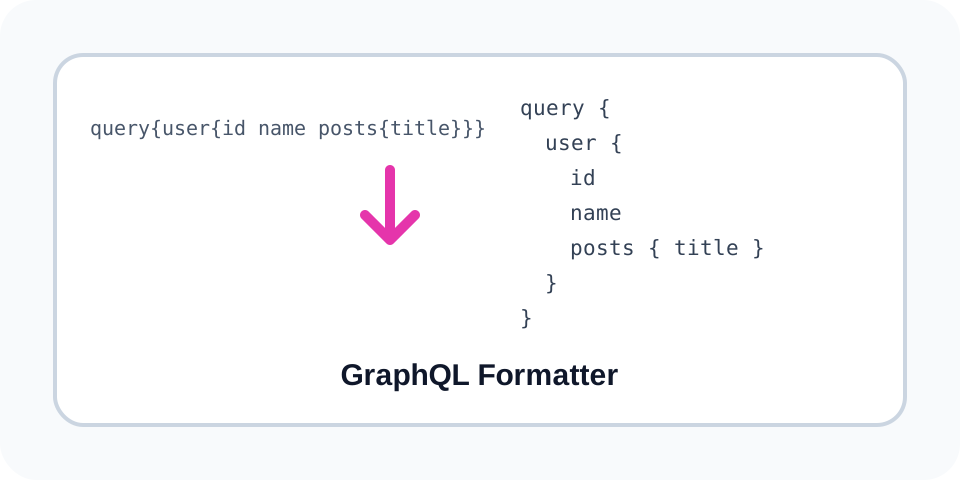
Focused controls, predictable output, and a workflow designed around this exact transformation.
Configured specifically for graphql formatter.
Source and result remain separate.
Submitted text is parsed, not run.
Copy or download after verification.
Practical details about input, output, privacy, limits, and the best way to use this tool.
GraphQL Formatter is an online utility for a focused graphql formatter workflow.
No. It processes structured text without running it as application code.
Compatible UTF-8 text files can be uploaded where supported.
Verify it with the destination parser, build pipeline, test suite, or staging environment first.
Tools can apply different parser versions, normalization rules, schema dialects, or whitespace policies.
Replace tokens, credentials, personal records, and confidential production values with safe samples.
Graphql Formatter works best when the source is realistic and the result is reviewed before export. Use graphql formatter on a small example first, then repeat the same graphql formatter workflow with a production-like sample that contains no private data.
After running graphql formatter, compare the source and result, check special characters and empty values, and test the output in the receiving application. A reliable graphql formatter workflow keeps the original input available until the destination accepts the result.
Typical mistakes include incomplete input, incorrect assumptions about defaults, hidden whitespace, encoding differences, and skipping final validation. When graphql formatter gives an unexpected result, reduce the example to the smallest failing case and add complexity back one change at a time.
Continue with Graphql Minifier or Json Formatter for a second formatting, validation, or verification step.
this formatter provides a focused this formatter workflow for developers, QA teams, technical writers, and API specialists. Begin with complete source data and keep an untouched copy before processing. The tool is designed for structured developer content, so missing context can hide important differences or validation failures. A careful review should cover query operations and related structures before the result is accepted.
Use this formatter to format copied queries, but always compare the output with the original source. Check names, values, nesting, order where it matters, and any parser message. This process improves accuracy without assuming that visual cleanliness alone proves technical correctness.
Confirm that the source is complete, the selected options match the document, the output contains no unexpected changes, and the destination system accepts the result. Save a verified copy only after these checks are complete.
this formatter provides a focused this formatter workflow for developers, QA teams, technical writers, and API specialists. Use UTF-8 text and include the entire document rather than a cropped fragment. Preserve quotation marks, nested structures, line endings, and special characters because each can affect parsing and output. A careful review should cover mutation operations and related structures before the result is accepted.
Use this formatter to review resolver requests, but always compare the output with the original source. Check names, values, nesting, order where it matters, and any parser message. This process improves accuracy without assuming that visual cleanliness alone proves technical correctness.
Confirm that the source is complete, the selected options match the document, the output contains no unexpected changes, and the destination system accepts the result. Save a verified copy only after these checks are complete.
this formatter provides a focused this formatter workflow for developers, QA teams, technical writers, and API specialists. Match the available settings to the source format and expected destination. Small option changes can affect whitespace, ordering, strictness, and the way errors or differences are reported. A careful review should cover fragment definitions and related structures before the result is accepted.
Use this formatter to clean test fixtures, but always compare the output with the original source. Check names, values, nesting, order where it matters, and any parser message. This process improves accuracy without assuming that visual cleanliness alone proves technical correctness.
Confirm that the source is complete, the selected options match the document, the output contains no unexpected changes, and the destination system accepts the result. Save a verified copy only after these checks are complete.
this formatter provides a focused this formatter workflow for developers, QA teams, technical writers, and API specialists. Read the result from top to bottom instead of checking only the first message. Pay attention to paths, line references, value types, missing fields, and any warning that may affect downstream consumers. A careful review should cover selection sets and related structures before the result is accepted.
Use this formatter to prepare documentation snippets, but always compare the output with the original source. Check names, values, nesting, order where it matters, and any parser message. This process improves accuracy without assuming that visual cleanliness alone proves technical correctness.
Confirm that the source is complete, the selected options match the document, the output contains no unexpected changes, and the destination system accepts the result. Save a verified copy only after these checks are complete.
this formatter provides a focused this formatter workflow for developers, QA teams, technical writers, and API specialists. Nested objects and collections deserve extra attention because a small change deep in the document can alter application behavior. Review parent paths and child values together. A careful review should cover arguments and related structures before the result is accepted.
Use this formatter to compare operation structure, but always compare the output with the original source. Check names, values, nesting, order where it matters, and any parser message. This process improves accuracy without assuming that visual cleanliness alone proves technical correctness.
Confirm that the source is complete, the selected options match the document, the output contains no unexpected changes, and the destination system accepts the result. Save a verified copy only after these checks are complete.
this formatter provides a focused this formatter workflow for developers, QA teams, technical writers, and API specialists. Include empty values, Unicode, long strings, repeated structures, optional fields, and intentionally invalid samples. Edge cases reveal whether the workflow is safe for real project data. A careful review should cover variables and related structures before the result is accepted.
Use this formatter to format copied queries, but always compare the output with the original source. Check names, values, nesting, order where it matters, and any parser message. This process improves accuracy without assuming that visual cleanliness alone proves technical correctness.
Confirm that the source is complete, the selected options match the document, the output contains no unexpected changes, and the destination system accepts the result. Save a verified copy only after these checks are complete.
this formatter provides a focused this formatter workflow for developers, QA teams, technical writers, and API specialists. A successful online result does not replace testing in the destination parser, framework, build process, or staging environment. Confirm that the final consumer accepts the output exactly as expected. A careful review should cover directives and related structures before the result is accepted.
Use this formatter to review resolver requests, but always compare the output with the original source. Check names, values, nesting, order where it matters, and any parser message. This process improves accuracy without assuming that visual cleanliness alone proves technical correctness.
Confirm that the source is complete, the selected options match the document, the output contains no unexpected changes, and the destination system accepts the result. Save a verified copy only after these checks are complete.
this formatter provides a focused this formatter workflow for developers, QA teams, technical writers, and API specialists. Remove passwords, access tokens, personal records, private URLs, and production secrets before using any online developer utility. Replace them with realistic placeholders that preserve structure. A careful review should cover nested fields and related structures before the result is accepted.
Use this formatter to clean test fixtures, but always compare the output with the original source. Check names, values, nesting, order where it matters, and any parser message. This process improves accuracy without assuming that visual cleanliness alone proves technical correctness.
Confirm that the source is complete, the selected options match the document, the output contains no unexpected changes, and the destination system accepts the result. Save a verified copy only after these checks are complete.
this formatter provides a focused this formatter workflow for developers, QA teams, technical writers, and API specialists. Record the source version, selected options, expected result, and verification method. Reproducible checks make code review faster and reduce confusion when several people work on the same document. A careful review should cover query operations and related structures before the result is accepted.
Use this formatter to prepare documentation snippets, but always compare the output with the original source. Check names, values, nesting, order where it matters, and any parser message. This process improves accuracy without assuming that visual cleanliness alone proves technical correctness.
Confirm that the source is complete, the selected options match the document, the output contains no unexpected changes, and the destination system accepts the result. Save a verified copy only after these checks are complete.
this formatter provides a focused this formatter workflow for developers, QA teams, technical writers, and API specialists. When a result looks wrong, first verify encoding, syntax, delimiters, quotation marks, and document completeness. Then compare the source with a minimal sample to isolate the exact failing structure. A careful review should cover mutation operations and related structures before the result is accepted.
Use this formatter to compare operation structure, but always compare the output with the original source. Check names, values, nesting, order where it matters, and any parser message. This process improves accuracy without assuming that visual cleanliness alone proves technical correctness.
Confirm that the source is complete, the selected options match the document, the output contains no unexpected changes, and the destination system accepts the result. Save a verified copy only after these checks are complete.
this formatter provides a focused this formatter workflow for developers, QA teams, technical writers, and API specialists. Use version control, automated tests, peer review, and staging checks before replacing production assets. The tool should support a broader quality process rather than become the only verification step. A careful review should cover fragment definitions and related structures before the result is accepted.
Use this formatter to format copied queries, but always compare the output with the original source. Check names, values, nesting, order where it matters, and any parser message. This process improves accuracy without assuming that visual cleanliness alone proves technical correctness.
Confirm that the source is complete, the selected options match the document, the output contains no unexpected changes, and the destination system accepts the result. Save a verified copy only after these checks are complete.
Continue with GraphQL Minifier, JSON Formatter, JavaScript Beautifier for additional formatting, validation, conversion, or comparison tasks.
Consult the GraphQL Specification for formal syntax, behavior, and interoperability requirements.